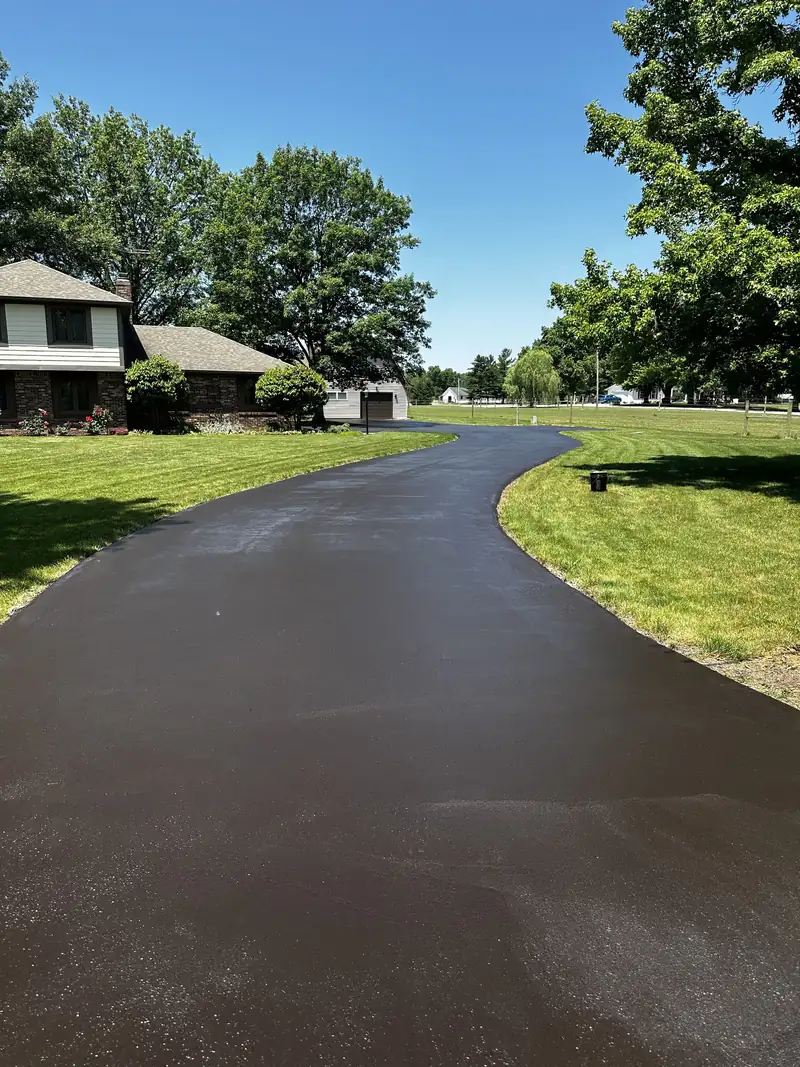
Asphalt starts aging the day it goes down. Sun and heat dry out the binder, rain finds the small cracks, and a St. Louis winter freezes whatever water gets in. A good sealcoat, put down at the right time over a clean, crack-filled surface, slows that process and keeps a driveway or parking lot looking sharp. Call (866) 490-7680 for a free estimate and 25% off.
What seal coating protects against
Sealcoat is a thin liquid coating spread over the top of existing pavement. Most sealers are either asphalt-based or refined coal tar-based, mixed with water and fillers such as sand. It does not add strength. Its job is to keep the things that break asphalt down away from the surface.
Around St. Louis, that list is long. Hot summers bake the surface, and sun, heat and air slowly oxidize the binder that holds the stone together. The pavement fades from black to gray, turns brittle and starts shedding small stones. Then winter brings repeated freeze-thaw cycles, and any water that got into the surface expands as it freezes and pries cracks wider.
- Sun and heat that dry out and gray the surface
- Rain and snowmelt that seep into small cracks and pores
- Freeze-thaw cycles that widen those cracks each winter
- Oil and gas drips that soften and stain asphalt
- A worn, patchy look that makes a property seem neglected
When to seal new asphalt
New asphalt needs time before its first coat. Fresh pavement is still curing and giving off light oils, and sealing too early can hold them in. Sealer makers typically call for at least 30 to 60 days of cure, and pavement industry guidance for driveways says to wait until the asphalt is at least several months old. There is no rush, either: a well-built driveway often goes a couple of years before it needs its first coat.
After that first coat, driveways are typically resealed every 2 to 5 years, and many land around every 3. Commercial lots with heavy traffic may wear through sooner at entrances and drive lanes. More is not better: sealing every year can build up a thick layer that cracks and flakes on its own. A good cue to reseal is when gray pavement starts showing through the old coat.
Crack filling comes first
Sealcoat can bridge hairline surface cracks, but it is too thin to fill an open crack. Spread it over one and the crack is still there, just painted black, and water still gets in. That is why proper sealcoating starts with crack repair.
Cracks are cleaned out, usually with compressed air and a wire brush, then filled. A hot-pour rubberized sealant is common because it stays flexible through summer heat and winter cold, though cold-pour fillers are also used. This matters in a freeze-thaw climate like ours. Water that reaches the base through an open crack can soften it, and that is how many potholes start.
- Clean the full surface and blow out debris
- Trim grass and dirt back from the edges
- Fill cracks, typically those about a quarter inch and wider
- Treat oil spots so the sealer bonds
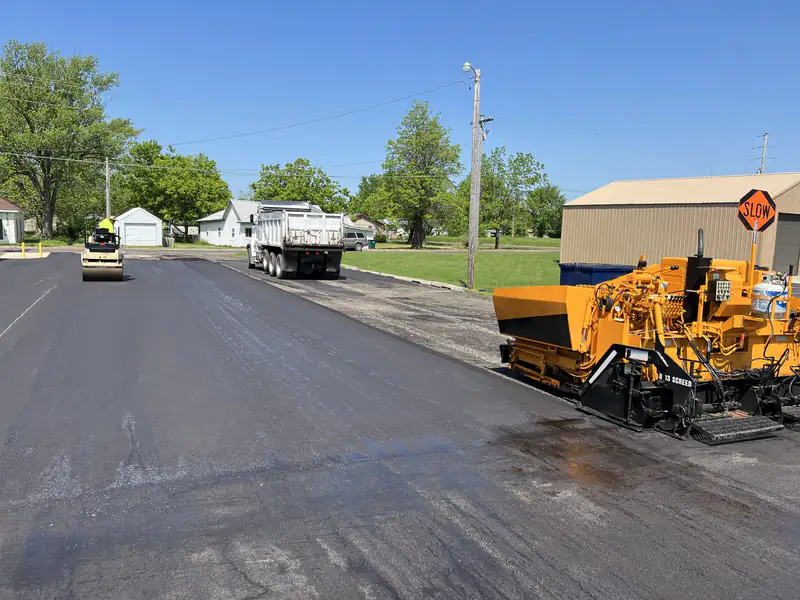
- Apply sealcoat, usually in two thin coats
Weather, season and cure time
Sealcoat needs warm, dry conditions. Manufacturers typically call for pavement and air temperatures of at least 50 degrees and rising, no drop below 50 for about 24 hours after, and no rain expected for about 24 hours. In the St. Louis area, that usually means late spring through early fall.
Cure time depends on the weather. On a hot, sunny day a coat can dry quickly, while cool nights and heavy humidity slow it down. Foot traffic is usually fine once the surface is dry to the touch, often after a few hours, and cars are typically kept off for 24 to 48 hours. For the first few days, avoid turning your steering wheel while the car is parked on the new surface, since that can scuff the soft finish.
What sealcoating cannot fix
Sealcoat is maintenance, not repair. If your driveway has spiderweb cracking (often called alligator cracking), soft spots, deep ruts, sunken areas or potholes, the problem is often structural: a weak base or pavement that is too thin for the loads on it. A coat of sealer may look good for a while, but the cracks usually come back along the same lines.
In those cases, the better call is patching, an overlay or new pavement, and sealcoating once that new asphalt has cured. On an estimate, we look at the whole surface and tell you plainly which one your pavement needs.
Driveways and parking lots
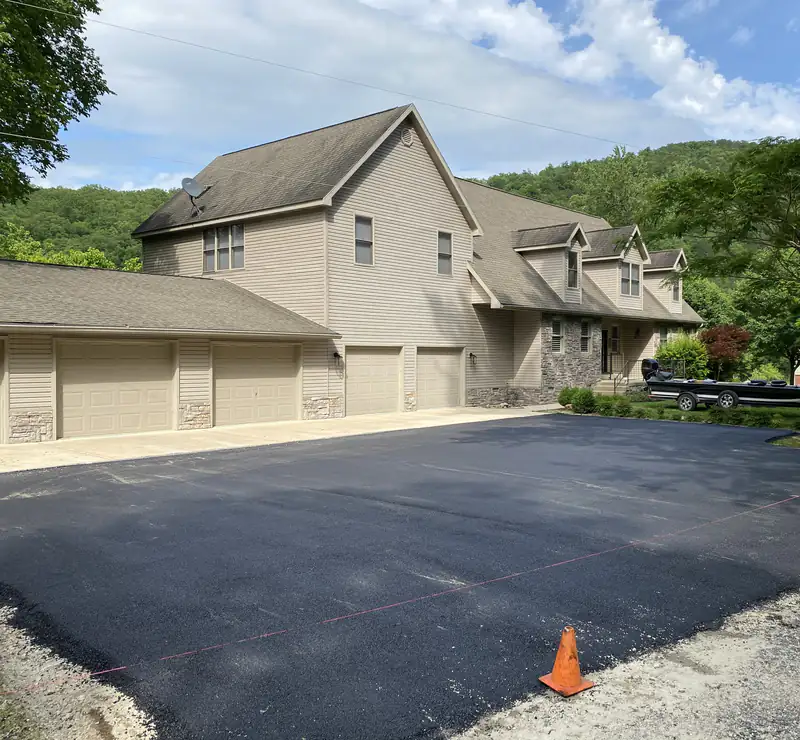
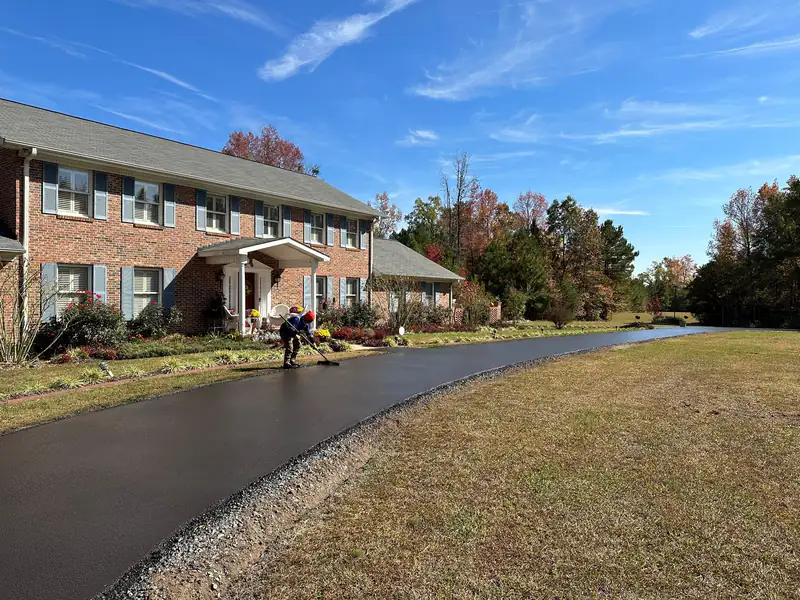
For homeowners, sealcoating is mostly about protection and curb appeal. A fresh, even black finish makes a driveway look cared for, helps it shed water and helps it resist oil stains.
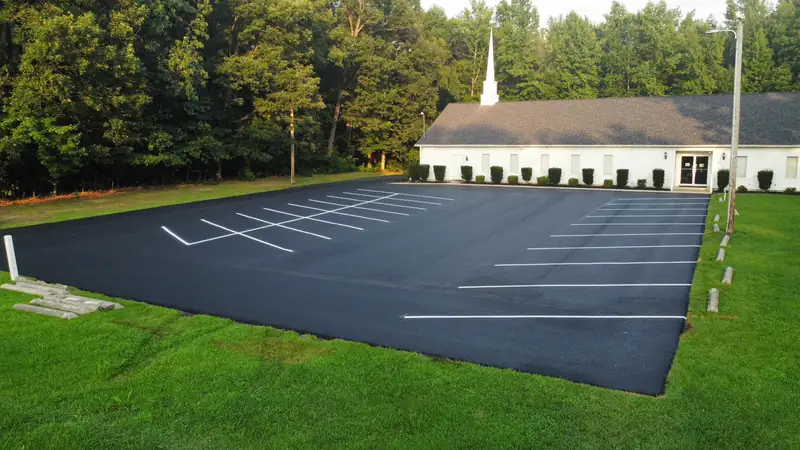
For property managers, a sealed lot is easier to keep clean, and new striping stands out sharply against a black surface. Sand is often mixed into the sealer for traction and wear resistance. Lots are commonly sealed in sections so part of the lot can stay open. We serve the City of St. Louis, St. Louis County, St. Charles and Jefferson counties in Missouri, the Illinois Metro East and the surrounding counties on both sides of the river.