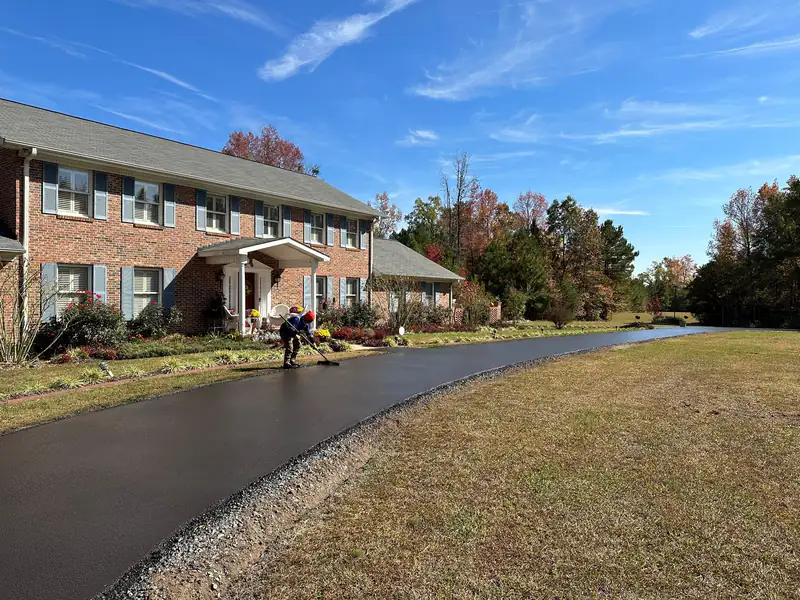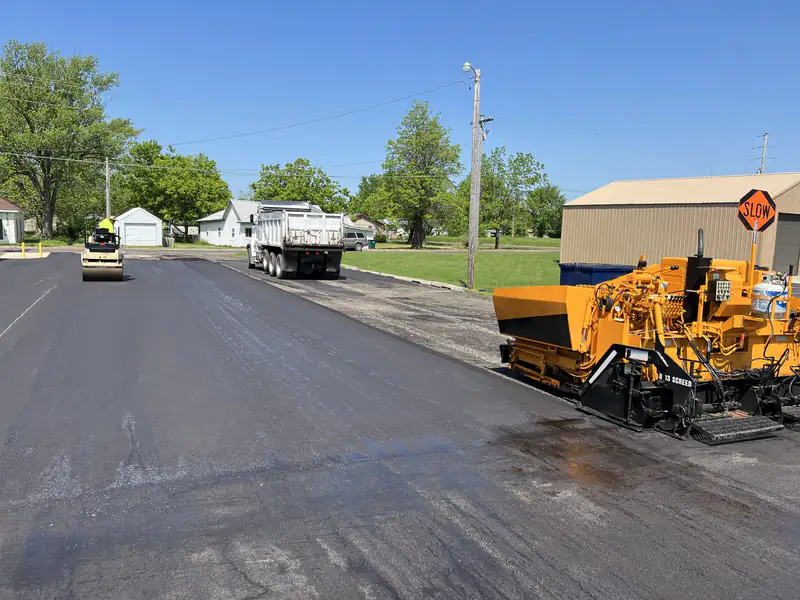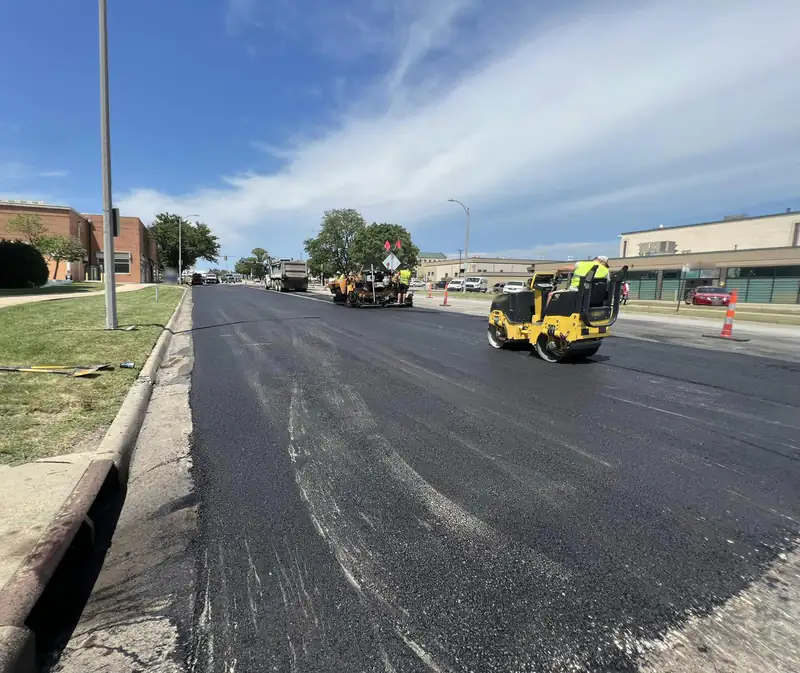
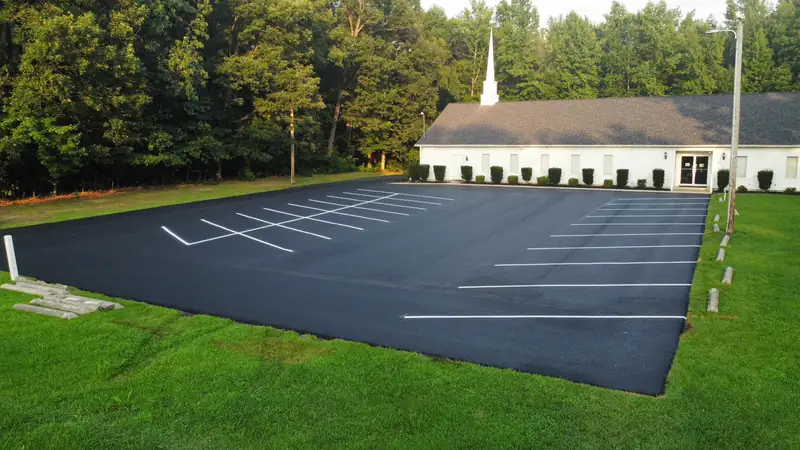
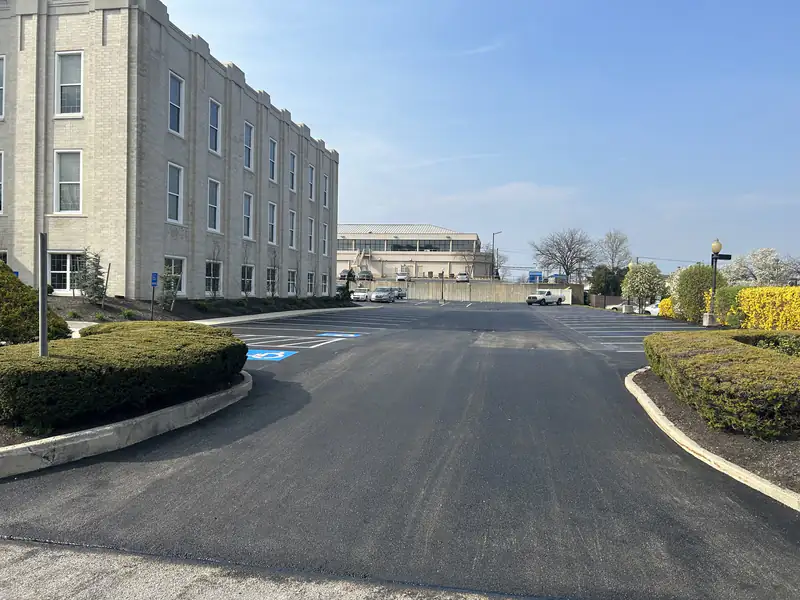
Your parking lot is the first thing customers, members and tenants touch. When it is cracked, patched and holding water, it means trip hazards, complaints and repair bills every spring. We pave new lots and repave worn ones across St. Louis and the Metro East, with a base built for our clay and winters, grading that moves water off, and a layout planned around accessible spaces. You get a free on-site estimate and 25% off.
New lot, overlay or mill-and-fill: which one your lot needs
Not every tired lot has to be torn out. The right fix depends on what is going on under the surface. At the estimate we look at how the cracks run, where water sits, which areas flex or sink under weight, and what kind of traffic crosses the lot each day. Then we explain which option fits and why.
This work is for the lots people use every day: shops and strip centers, churches, offices, industrial and equipment yards, apartment complexes and HOA common areas. Each one has different traffic, and the pavement should be built for it.
Here is the parking lot work we do for commercial and institutional properties:
- New construction: for a new building, an addition, or a gravel lot getting paved for the first time. The ground is graded, an aggregate base is built and compacted, and hot mix goes down in lifts.
- Overlay: a new layer of asphalt, typically 1.5 to 2 inches, over pavement that is worn on top but still solid underneath.
- Mill-and-fill: the worn top layer is ground off and replaced with new asphalt. This keeps curb heights, door thresholds and drainage where they belong, which a plain overlay can throw off.
- Full-depth patching: failed areas are cut out through the asphalt, the base is repaired and recompacted, and new hot mix is placed and rolled. It is often done ahead of an overlay.
- Full reconstruction: when the base has failed across most of the lot, patches and overlays only buy time. Removing and rebuilding is usually the fix that lasts.
Built for St. Louis clay, freeze-thaw and summer heat
Lots around St. Louis get hit from both ends of the calendar. In winter, water gets into cracks, freezes, expands and pries the pavement apart. After enough freeze-thaw cycles and traffic, those cracks turn into potholes. In summer, hot days soften asphalt, and turning tires, parked trucks and dumpster wheels can scuff, dent or rut the surface, especially where the pavement was built too thin.
Underneath, the silty clay soils common around St. Louis hold water and lose strength when they are wet. A lot on soft clay without enough base tends to rut, sink and crack, no matter how good the top looks on day one. Cracks in old pavement also tend to show back through a new overlay, which is called reflective cracking. That is why an overlay on a failed base is money spent twice.
Timing matters too. Hot mix plants around the region typically run from spring through fall, and asphalt needs warm air and warm ground to compact right. A lot paved too cold can look fine at first but may never reach the density it needs to last.
A parking lot built to last usually starts with:
- Proof-rolling the subgrade with a loaded truck to find soft spots, then digging out and replacing or stabilizing the bad soil.
- A compacted aggregate base, typically about 6 inches under car parking and 8 to 10 inches where trucks, buses and delivery vans travel.
- Thicker asphalt at entrances, drive lanes, loading areas and dumpster pads, where truck traffic tends to break down a thin section early. Where a garbage truck stops and loads, industry guidance commonly calls for at least 6 inches of asphalt over 8 inches of base.
- Rolling each lift while the mix is hot, so the surface is dense and sheds water instead of soaking it up.
Drainage: where many parking lots fail
Water is one of the biggest threats to any parking lot. Standing water soaks into cracks and softens the base, and in winter it turns into ice right where people walk. Good drainage gets designed in before the first load of asphalt shows up.
Most lots are graded so water sheets toward curb lines, gutters or storm inlets. Designs typically call for a slope of at least 1 percent, and about 2 percent is a common recommendation, because flatter pavement is hard to build without low spots that hold water. Existing dips, sunken inlets and humps from old patches get corrected during grading, not covered over.
If your project adds new paved area, local stormwater and permit rules may apply. Your city, county or engineer sets those requirements, and the grading plan has to follow them.
- Rebuild settled storm inlets and set their frames to match the new surface.
- Fix low spots that hold water (the birdbaths you see after rain) before paving.
- Slope pavement away from building doors and sidewalks.
- Shape entrances so street runoff does not drain into your lot.
ADA parking layouts and striping basics
A repaved lot needs a layout that works for drivers, people on foot and people with disabilities. Under federal ADA guidance, resurfacing or resealing a lot counts as an alteration, so the new layout generally has to include the accessible spaces the lot requires. The U.S. Justice Department also says a business that restripes its lot must provide the accessible spaces the 2010 ADA Standards call for.
Regular stalls are commonly about 9 feet wide by 18 feet long, but your city's zoning code sets the minimum stall and drive aisle sizes. Which accessibility rules apply depends on the type of property and your local building code, and your local building official has the final word. Have your site plan handy at the estimate, or we will talk through the layout so accessible spaces are planned before paving, not squeezed in after.
The basics under the 2010 ADA Standards:
- Count: a lot with 25 or fewer spaces needs at least one accessible space, and the number rises as the lot grows. At least one in every six accessible spaces must be van accessible.
- Size: car spaces at least 8 feet wide with an access aisle at least 5 feet wide. Van spaces at least 11 feet wide with a 5-foot aisle, or 8 feet wide with an 8-foot aisle. Aisles must be marked to discourage parking in them.
- Slope: accessible spaces and their aisles can be no steeper than 1:48 (about 2 percent) in any direction, so they need careful grading.
- Location and signs: accessible spaces sit on the shortest accessible route to an accessible entrance, with signs mounted so the bottom edge is at least 60 inches above the ground.
- Illinois side: the Illinois Accessibility Code is stricter. Each accessible space and its aisle must add up to at least 16 feet wide, the aisle gets yellow diagonal striping, and sealcoating, resurfacing or restriping an existing lot brings these rules into play.
Keeping your business open while the lot is paved
A shop, church or office cannot just close for a week. Most parking lots can be paved in phases, so part of the lot stays open while the rest is worked on.
Before work starts, we map out the phases with you: which entrance stays open, where customers and staff park each day, where deliveries go, and how cones and signs guide traffic. Fresh asphalt can usually take passenger cars once it has cooled and firmed up, often within 1 to 3 days. Heavy trucks and dumpsters should wait longer, especially in summer heat. A clear schedule shared with tenants, members and delivery drivers keeps surprises to a minimum.
- Pave in sections with a planned route for traffic.
- Keep an entrance open wherever the site allows.
- Plan work around your busiest days and hours.
- Stripe each finished section so it reopens ready to use.
What drives the cost of a parking lot
Every lot is priced on site, because the numbers depend on what is under your pavement. The biggest factors are:
The estimate is free, and you get 25% off. Call (866) 490-7680 or request an estimate online, and we will walk the lot with you.
- Square footage and the shape of the lot.
- Type of work: overlay, mill-and-fill, patching or a full rebuild.
- Base condition and how much soft clay has to come out.
- Asphalt thickness, which depends on cars versus trucks.
- Drainage, inlet and curb work.
- Phasing, site access and striping.
- Asphalt prices, which tend to move with oil prices.