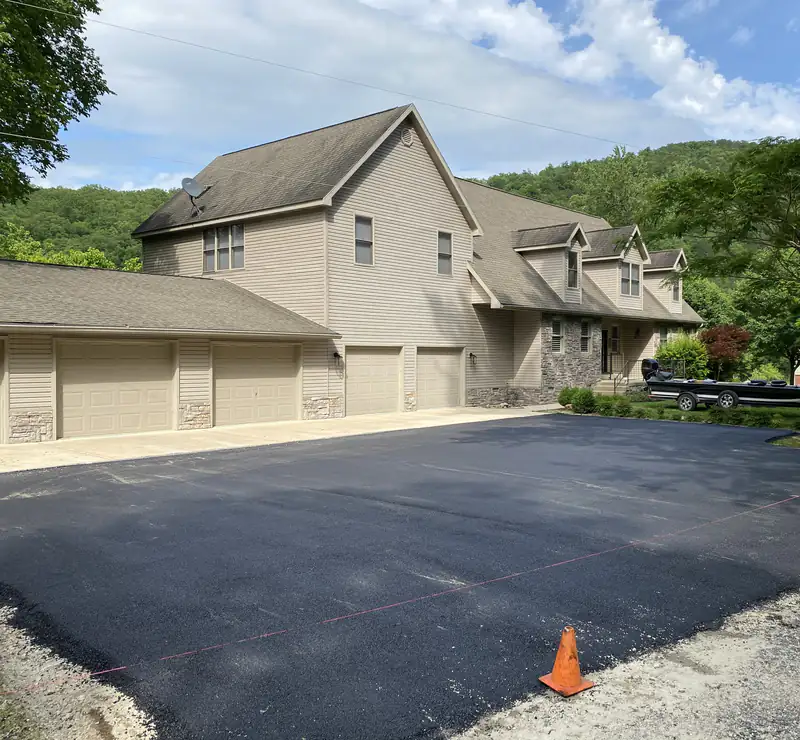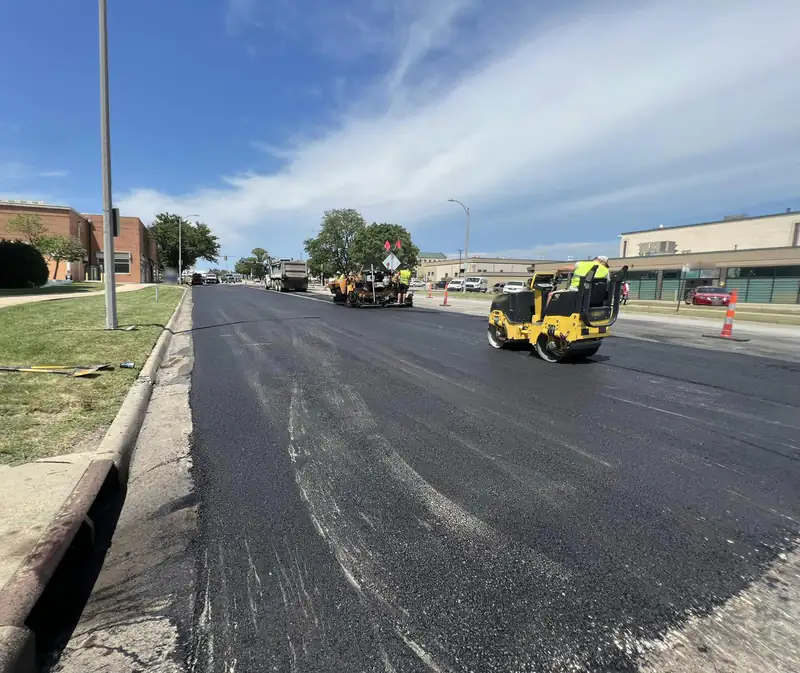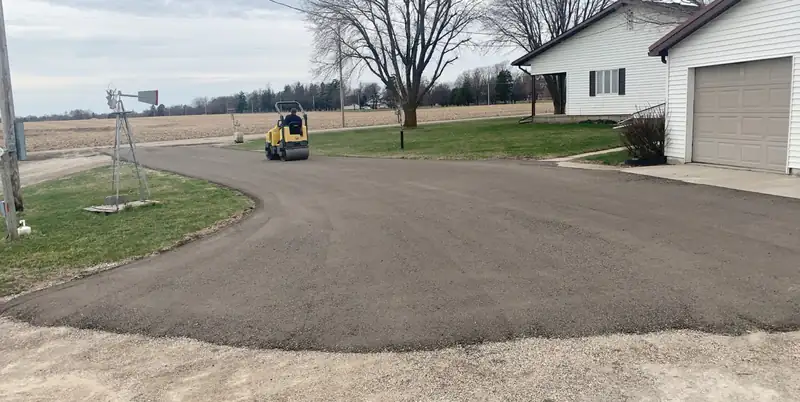
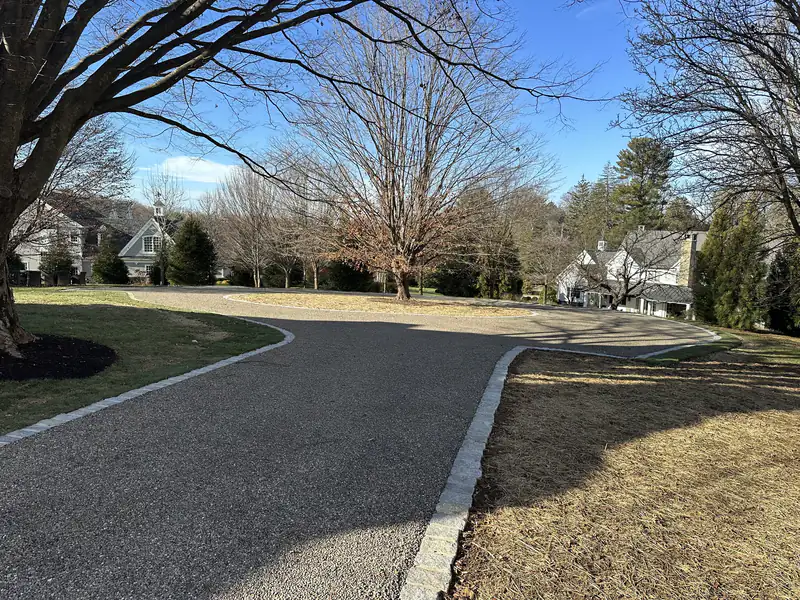
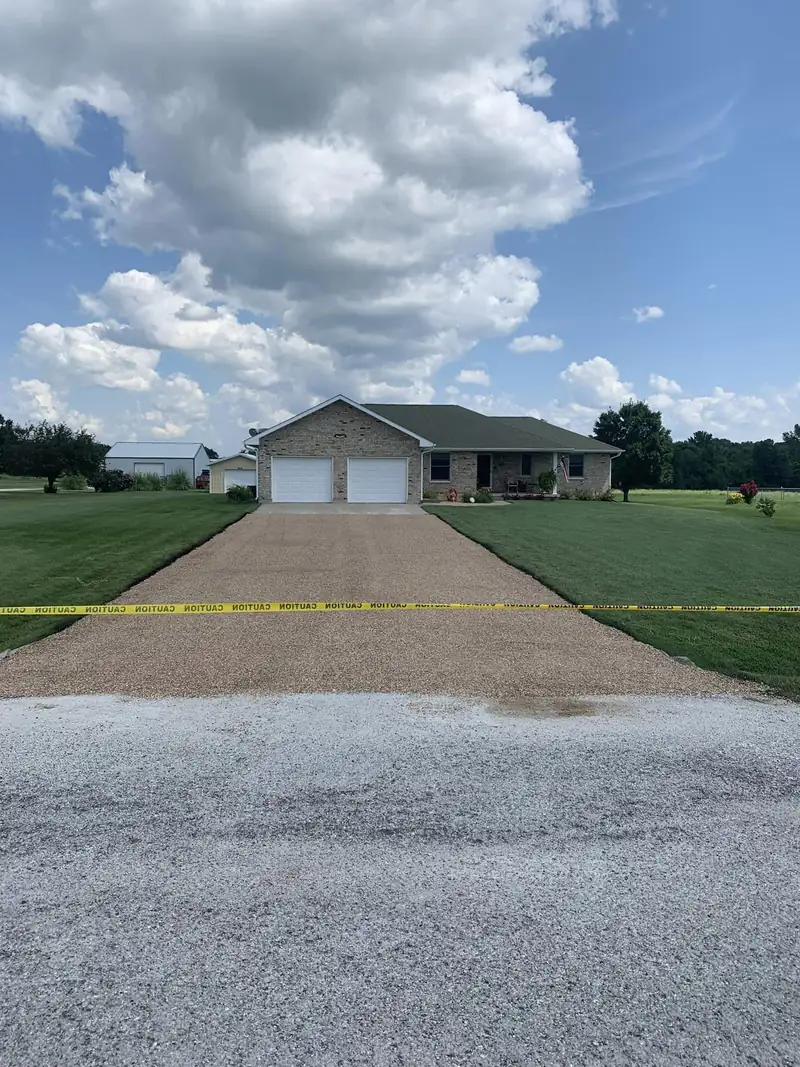
Chip seal, often called tar and chip, is a sprayed layer of liquid asphalt covered with crushed stone and rolled in. On a long gravel drive or farm lane it gives you a sealed, grippy surface with a country look, usually for less than hot mix. It is not right for every property, so here is how it works, where it wins and the trade-offs to weigh before you call.
What chip seal is and how it goes down
A chip seal is built on site in a few quick steps. A distributor truck sprays a thin, even coat of liquid asphalt, usually an asphalt emulsion. A spreader drops a single layer of clean crushed stone right behind it. Rubber-tired rollers press the stone into the binder, and once it sets, the loose stone is swept off.
People still say tar and chip, but modern chip seal uses asphalt binder, not coal tar. A single chip seal is one layer of binder and stone. A double chip seal repeats the process with a second, smaller stone on top for a tighter, harder-wearing surface, and it is often the choice when a gravel drive is being surfaced for the first time.
Know this up front: chip seal is a wearing surface, not a structural one. It seals out water and takes tire wear, but it adds very little strength. The strength comes from the compacted gravel base underneath, so base work matters more here than anywhere else. It is the same kind of treatment MoDOT uses on many of its lower-traffic state routes.
When chip seal beats hot mix
Hot mix asphalt is the smoother, stronger, longer-lasting surface, and for most suburban driveways and almost every parking lot it is the better buy. Chip seal earns its place on long, lightly used surfaces, where the cost of hot mix per foot adds up fast.
- Long rural driveways and lanes, where the length makes hot mix hard to justify
- Farm lanes, field access roads and private roads with light traffic
- Gravel drives that rut, wash out or throw dust every summer
- Sloped drives, where the stone texture gives tires grip in the rain
- Wooded and country lots, where a stone finish fits better than smooth blacktop
- Old chip seal that is still sound underneath and just needs a fresh layer
The trade-offs to know first
Chip seal is a good surface with real limits. Any chip seal paving contractor worth calling should walk you through these before the job, not after.
- Loose stone early on. Some chips come loose over the first few weeks as the surface settles. Expect to sweep, and expect a few stones in the grass and the garage.
- Snow plowing takes care. A steel blade set tight to the surface can catch and pull chips. Raise the blade slightly or use plow shoes.
- Rough texture. It is not a surface for basketball, bikes, skateboards or bare feet, and shoveling is harder than on smooth asphalt.
- Soft on the hottest days. In a hot, humid St. Louis summer the binder can soften, and a surface with too much binder can bleed and feel sticky.
- It will not fix a bad base. Ruts, soft spots and drainage problems show right through. Those need base repair first.
- Rarely a fit for parking lots. Tight turns, crisp striping and heavy use call for hot mix.
Chip seal in St. Louis weather and ground
Freeze-thaw winters are hard on any unsealed surface. Water soaks into gravel and small cracks, freezes, expands and loosens things up. A good chip seal keeps most surface water out of the base, which is a big part of its value on a rural lane.
The ground underneath is the other half. Clay-heavy soils are common around St. Louis, and clay holds water and swells, shrinks and heaves as the seasons change. A chip seal over wet clay with too little base rock tends to break up early. A solid job starts with grading, enough compacted base and a crown or ditch that moves water off the lane.
Timing matters too. Chip seal needs warm, dry conditions so the binder can cure and grip the stone. MoDOT's spec for chip seals on state roads, for example, calls for a dry surface, air and pavement temperatures above 60 degrees, and no forecast drop below 40 degrees within 24 hours. Around St. Louis that usually means late spring through summer. Hot mix can go down in cooler weather, so its season typically runs spring through fall while the asphalt plants are producing. That makes the chip seal window narrower, so it pays to plan early in the year.
Keeping a chip seal surface in shape
The first few weeks count the most. Drive slowly, avoid turning the steering wheel while the vehicle is standing still, and keep heavy trucks off the fresh surface when you can. Sweep or blow loose stone off the drive instead of letting tires kick it around.
After that, upkeep is simple. Keep ditches and culverts clear so water leaves the lane, and patch small failures before they spread. When the stone wears thin and dark binder starts to show, a new single layer can go right over the old surface. MoDOT reports that chip sealing typically adds about 5 to 7 years of life to lower-traffic roads before the next treatment.