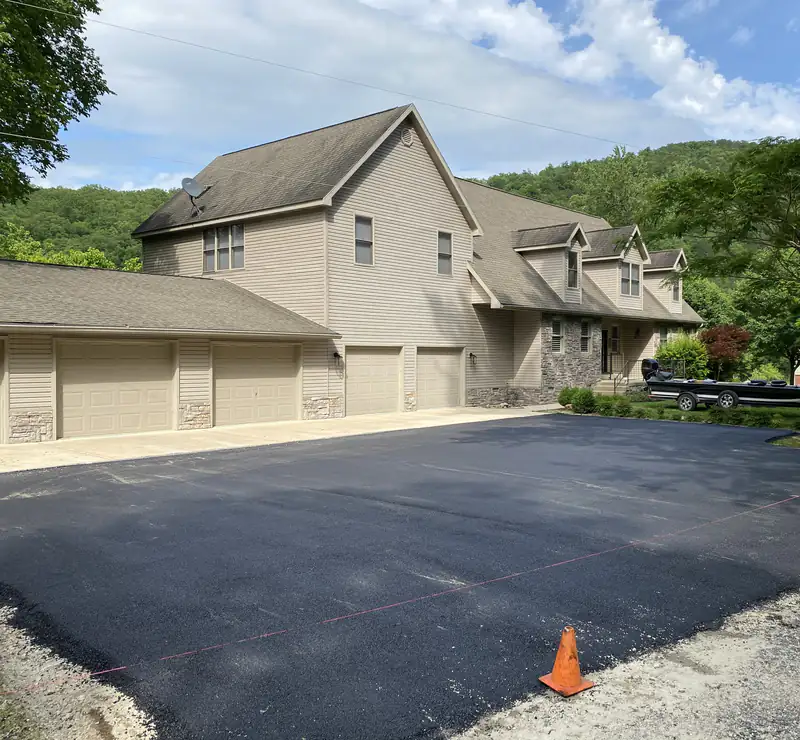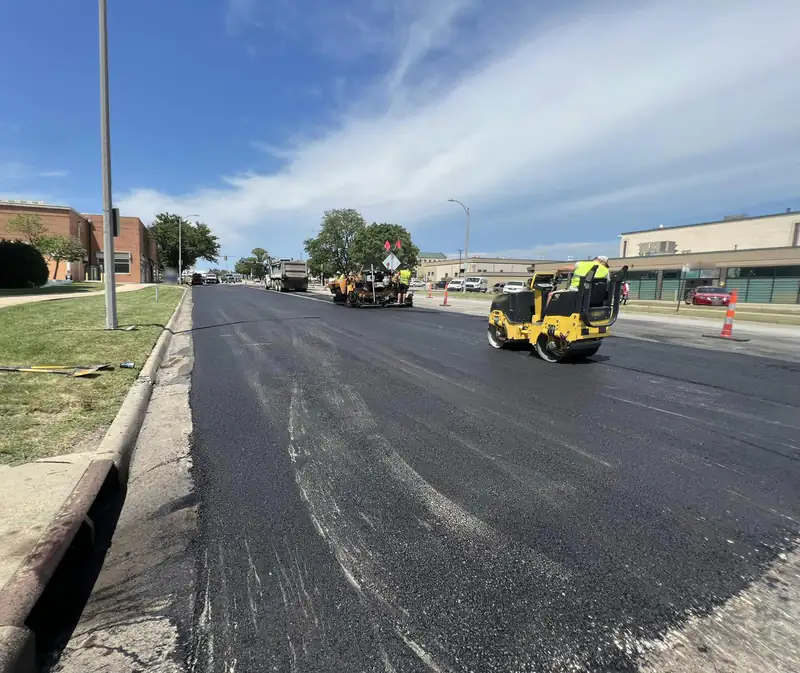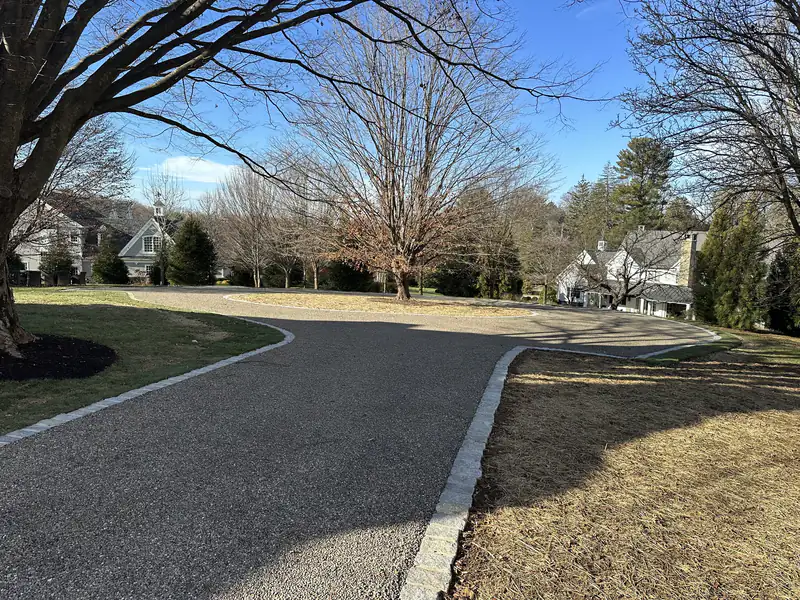
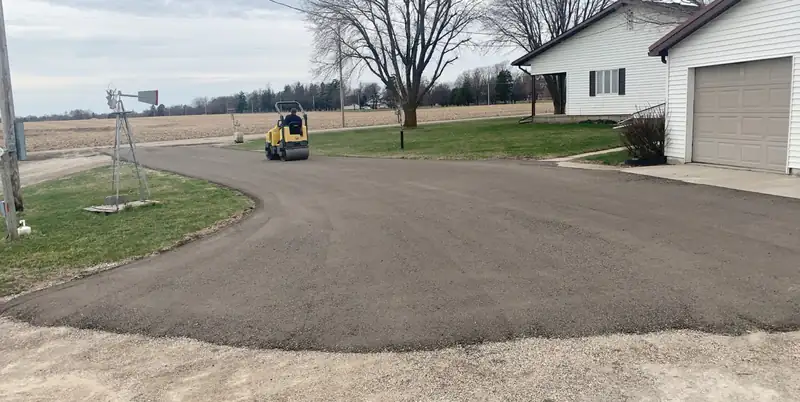
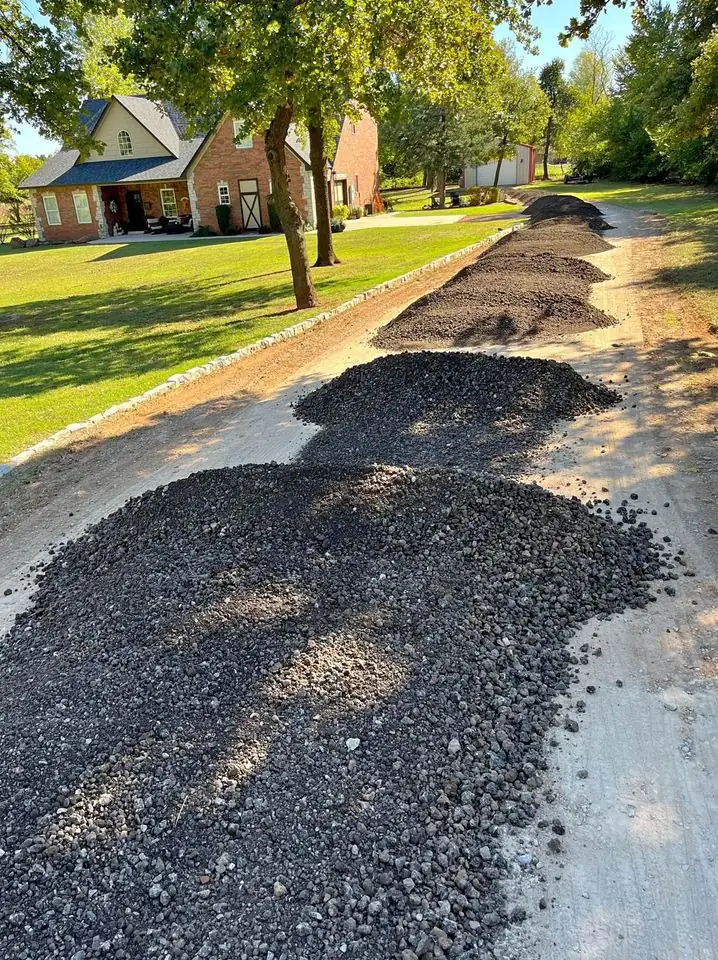
Recycled asphalt, also called asphalt millings or RAP (reclaimed asphalt pavement), is old pavement ground up and put back to work. Spread over a solid base and rolled tight, it gives you a firm, dark surface that stays put better than gravel and costs less than new hot mix. It fits long driveways, farm lanes, equipment yards and overflow lots. Call (866) 490-7680 for a free estimate and 25% off.
What recycled asphalt is and how it binds
Most millings come from resurfacing jobs. A milling machine grinds the worn top layer off a road or parking lot into small, gravel-sized pieces, and many suppliers crush and screen the material to a more even size. Each piece still carries a coating of the original asphalt binder, the sticky part that held the old pavement together, now stiffened by years of sun and air.
That leftover binder is what sets millings apart from gravel. Once the material is compacted, summer heat can soften the aged binder a little and tire traffic presses the pieces together. Over the first warm season, the surface often firms up into a semi-bound layer. It will not be as smooth or tight as hot mix, but it usually holds together better than loose gravel. Some owners add a sprayed asphalt emulsion or a chip seal on top to lock the surface in sooner.
How a millings surface is graded and compacted
A good millings job starts below the surface. Much of the ground around St. Louis is fine, silty soil over clay. It holds water, loses strength when wet and can heave when it freezes. Millings dumped straight onto soft, wet ground tend to rut, and piling on more millings rarely fixes it. Most of what decides how long a millings drive lasts happens before the first truckload arrives. So the ground gets built first, then the millings go on in thin, well-rolled layers.
Edges get extra attention, because that is where an unpaved surface breaks down first. A firm shoulder and a clean edge along the grass help the millings stay where they belong.
- Strip topsoil, roots and soft spots down to firm ground
- Shape and roll the subgrade so water drains off, not under
- Add compacted crushed rock, and fabric on wet clay, where the ground needs it
- Spread millings in thin, even layers and roll each one tight
- Crown or slope the finished surface so rain runs off the sides
Recycled asphalt vs. gravel vs. hot mix
Millings sit in the middle. Next to gravel, they usually make less dust, scatter less and wash out less on slopes once the surface binds. Next to hot-mix asphalt, they cost less up front, but they will never look like a new blacktop driveway. Expect a textured, gray-black surface with some loose pieces, especially in the first season.
The trade-offs are real. Loose pieces can get tracked into garages early on, snowplow blades and tight turns by heavy trucks can loosen the top, and quality depends on the source. Clean millings from road and lot resurfacing bind better than a stockpile mixed with dirt, concrete or base rock.
- Versus gravel: usually less dust, less loose rock in the yard and fewer washouts
- Versus hot mix: lower cost, but a rougher, less finished look
- Easy to repair: add material to a low spot, rake it in and compact it
- Puts old pavement back to use instead of new quarry rock
Where recycled asphalt makes sense
Millings work best where function matters more than finish: long rural driveways, farm lanes, equipment and trailer yards, contractor lots, overflow parking and the shoulders along an existing drive. They are also a practical first step if you plan to pave with hot mix later, since a firm, well-drained millings layer can sometimes stay in place under the new asphalt, depending on its condition and the ground below it.
If your drive needs a smooth, clean finish, or the area is a main commercial lot with striping and accessible parking spaces, hot mix is usually the better call. Ask about both on the same free estimate and compare them side by side.
Timing it right in the St. Louis climate
Millings bind best with heat. Placing them from late spring through early fall gives the surface a full warm stretch to knit together before the first freeze. Hot St. Louis summers help the surface tighten up. Because millings are placed cold, the work is not tied to hot mix plants being open for the season, but cold weather leaves them loose until the next warm spell. That is why timing still matters.
Winters on both sides of the river bring repeated freeze-thaw cycles, and water is what does the damage. Good drainage and a solid base matter more than extra thickness on top. A light topping of fresh millings after the first year or two can fill any low spots that settle.