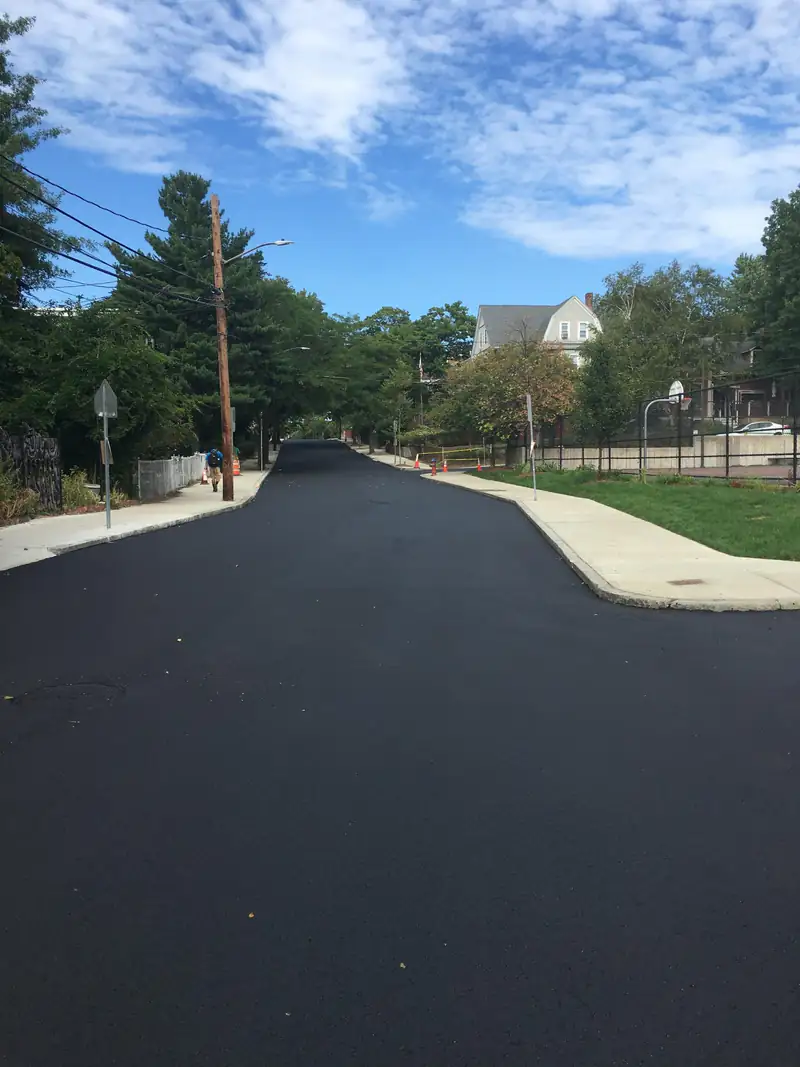
Many roads fail from the bottom up. Water gets under the pavement, the soil below goes soft, frost heaves the base, and the asphalt cracks over the weak spot. We build private roads, subdivision streets, access roads and farm lanes across greater St. Louis in the order that matters: firm subgrade, real drainage, compacted base rock, then hot mix asphalt rolled tight. Call (866) 490-7680 for a free estimate and 25% off.
Private roads, not highways
Here is what this page covers, and what it does not. Interstates, state highways and most public streets are designed by engineers for MoDOT, IDOT, counties and cities, then bid out through formal public lettings. If you drive it to work every day, it most likely came through that process.
Our road construction is for private owners: the street into a new subdivision, the access road behind a shop or warehouse, a lane across a farm, a long drive up a wooded hill to a house set back from the road. We also pave HOA roads, and when a street may be handed to a city or county later, we plan the build around that jurisdiction's standards. The steps are the same ones highway crews follow: grade, drain, base, pave, roll. The scale and the paperwork are smaller.
- Private roads and shared lanes that serve several homes
- Subdivision streets and HOA roads
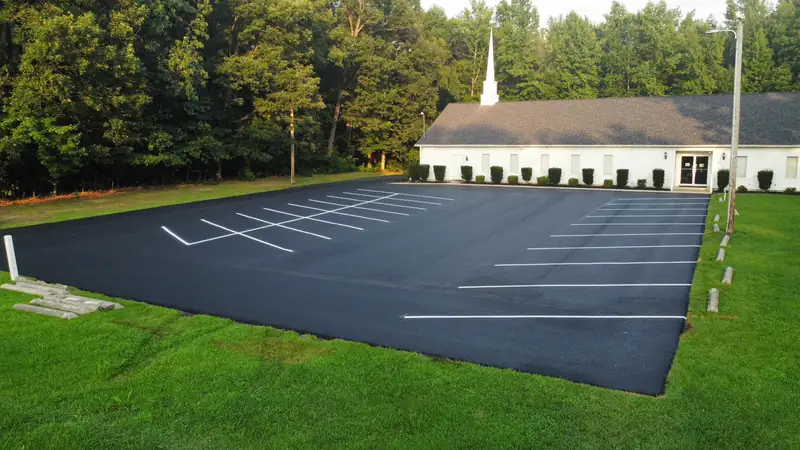
- Access roads for commercial, industrial and church properties
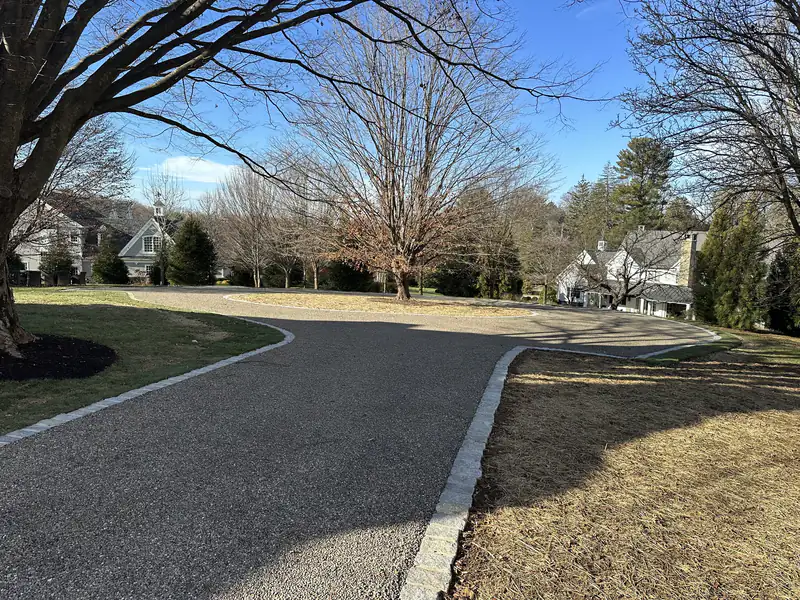
- Farm lanes and long rural drives
- Haul roads and construction entrances that carry heavy trucks
Why roads around St. Louis often fail from the bottom up
A road is a stack of layers. The asphalt on top gets the attention, but it is only a few inches thick. What holds it up is the aggregate base under it and the native soil under that, called the subgrade. If either one gets soft, the asphalt flexes under every load until it cracks.
Around St. Louis, much of the upland soil formed in windblown silt called loess, often over a clayey subsoil, and toward the Ozark foothills cherty red clay over limestone is common. The St. Louis County soil survey lists low strength, frost action, shrink-swell and wetness as common limits for roads and streets. Silt and clay hold water and lose strength when wet, and clayey soils can swell and shrink as they wet and dry.
Add freeze-thaw winters. Water in the soil and base freezes and pushes the pavement up, then thaws from the top down and leaves the ground soft and soaked. That is how you get the potholes and alligator cracking you see on roads built in a hurry. Hot, humid summers bring their own test: asphalt softens in the heat, and heavy trucks can push ruts into it, especially over a weak base.
That is why most of the work in a good road goes into the parts you will never see again once it is paved.
Subgrade prep: getting the ground right
We start by stripping topsoil, roots and organic material, because none of it will ever compact into a solid road bed. Then the route is cut and filled to grade, and the soil is compacted in layers with its moisture close to what it needs to pack tight. Clay or silt that is too wet will not compact well. Bone-dry soil will not either.
Before any rock goes down, the subgrade gets proof rolled: a loaded truck or heavy roller drives the full length while we watch for ground that pumps, ruts or moves. Soft spots get fixed now, while it costs less, not after the road is paved. Common fixes include:
- Undercutting: digging out the soft soil and replacing it with compacted rock
- Geotextile fabric to keep clay from mixing into the base, or geogrid to stiffen the base and spread the load
- Lime or cement stabilization to dry out and firm up wet clay
- Extra base rock where the native soil is simply weak
Drainage, ditches and culverts
Water is the biggest enemy of any road. The goal is simple: get water off the surface fast, and keep it out of the base. Every part of the drainage plan serves those two jobs.
The road surface is shaped with a crown or a cross slope, typically 1.5 to 2 percent (up to about a quarter inch per foot), so rain sheds to the edges instead of sitting in the wheel paths. From the edges, water needs somewhere to go: roadside ditches graded to carry it away, culverts under the road where it crosses a low spot or a drainage path, and outlets that do not dump water onto a neighbor. Culverts have to be sized for the water they carry and set with enough cover over them; an undersized pipe backs water up against the road bed. On hillside lanes, water running down the road itself is what cuts gullies in gravel and eats away asphalt edges, so we look for ways to turn it off the road before it picks up speed.
Around St. Louis this matters twice over. Silt and clay drain slowly, so water that gets into the base tends to stay there, and in winter it freezes. A road with good drainage and an ordinary surface often outlasts a road with a thick surface and poor drainage.
Base rock and the asphalt surface
On top of the prepared subgrade goes the aggregate base: crushed stone, spread and compacted in lifts. For private roads and subdivision streets it is typically 6 to 10 inches, deeper over soft soil or where heavy trucks will run. The base is shaped to the same crown as the finished road and checked again before paving.
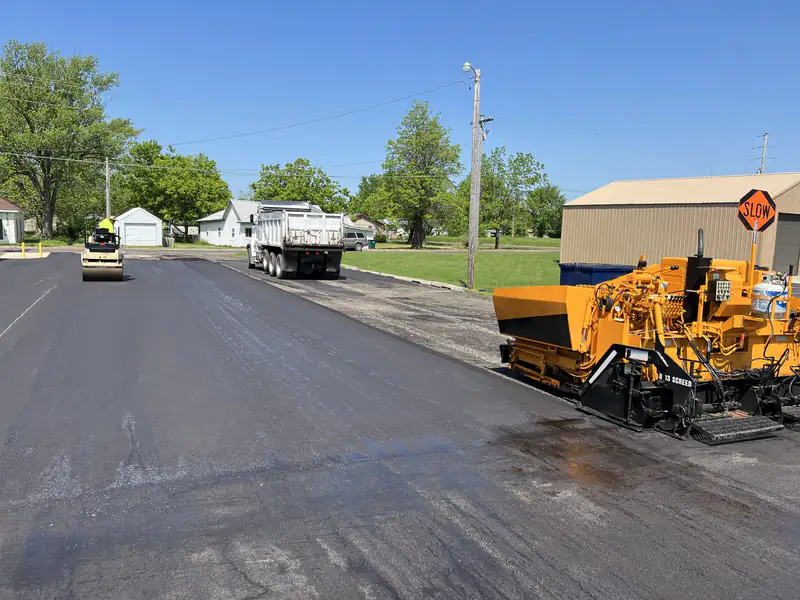
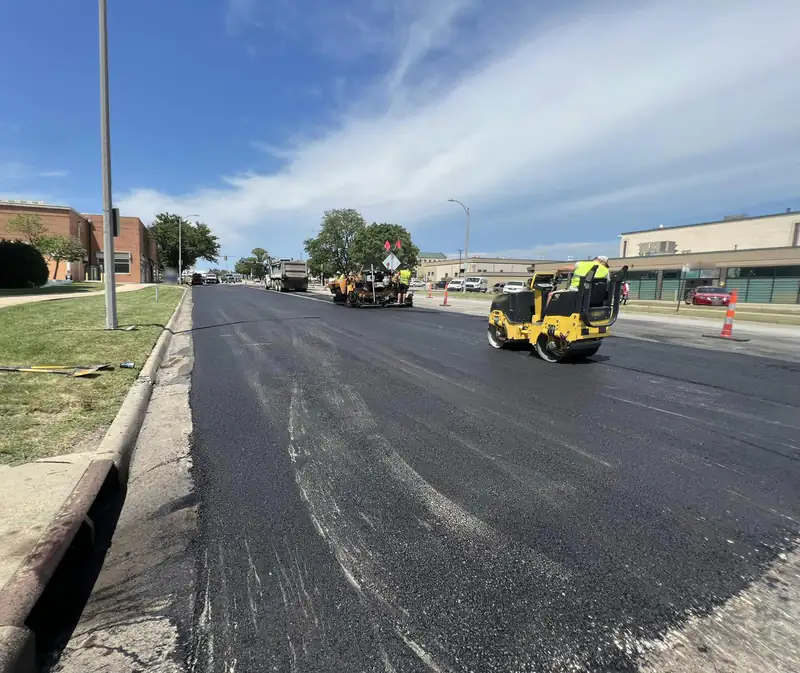
Hot mix asphalt usually goes down in two lifts. A thicker base or binder course comes first, then a finer surface course that gives the road a tight, smooth top. Total thickness for a light-traffic private road or subdivision street is typically 3 to 5 inches, with more for roads that carry loaded trucks, school buses or farm equipment. Streets that will be handed to a city or county follow that jurisdiction's standard section, which may call for more. Each lift is placed by a paver and compacted with rollers while it is still hot. Good compaction gives asphalt much of its strength and keeps water from soaking in, so the rolling has to be done right, and done before the mix cools.
Edges need support too. An asphalt edge with nothing beside it breaks off under tires, so the base rock should run a little wider than the pavement, and the shoulders get backfilled and compacted with soil or rock once paving is done. On narrow private roads, that shoulder is often what keeps a passing truck from crumbling the edge.
Hot mix has to go down hot, on a dry, unfrozen base. Many asphalt plants around St. Louis cut back or shut down in the coldest months, so paving season typically runs from spring through fall, and it goes smoothest on warm, dry days. Grading and base work can start earlier, but wet clay slows everything down, so it pays to plan early in the year.
Planning a private road or subdivision street
Not every road needs full-depth hot mix. For a long farm lane with light traffic, chip seal or recycled asphalt millings can often cover a lot of ground for less, and we are glad to price more than one approach so you can compare.
A few questions up front shape the whole design, and the cost:
- What will use it? Cars only, or trash trucks, school buses, delivery trucks, grain trucks and equipment?
- Will it ever be turned over to a city or county? If so, it usually has to be built to that jurisdiction's street standards, with inspections along the way.
- Where does it meet a public road? A new entrance onto a state route needs a permit from MoDOT or IDOT, and counties and cities have their own rules.
- Do fire trucks need to reach the end? Where a fire access road is required, codes commonly call for at least 20 feet of clear width and a turnaround on dead ends longer than 150 feet. The local fire district sets the details.
- Will homes be built along it? Subdivision streets often get the base lift early and the surface lift after most home building is done, so construction traffic does not scar the final surface.