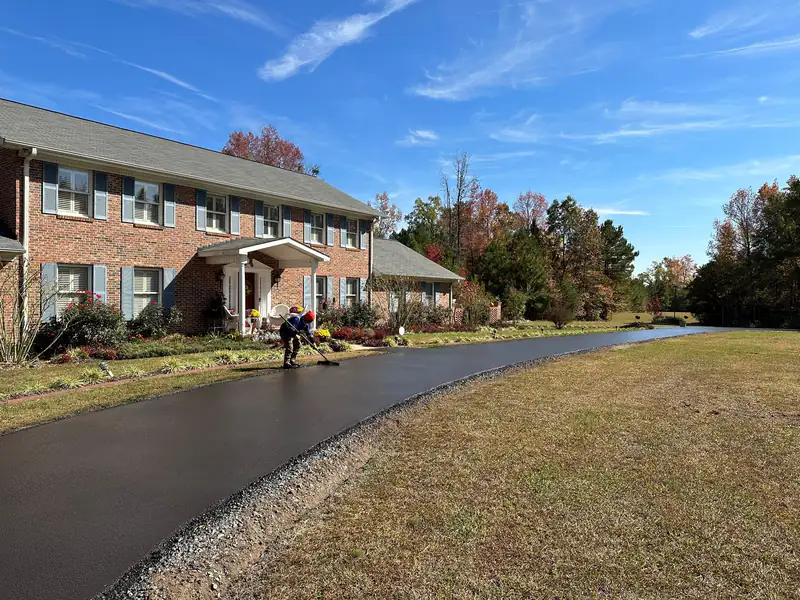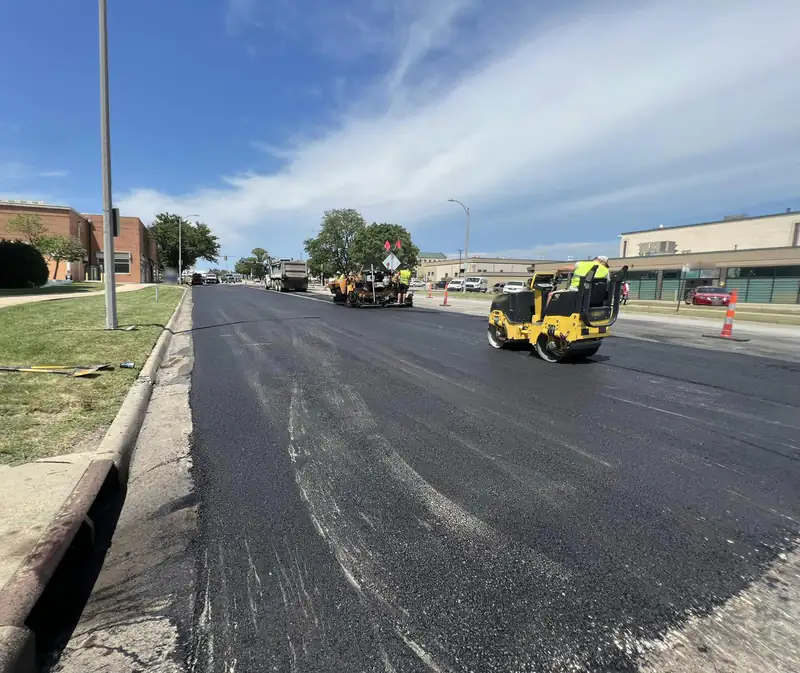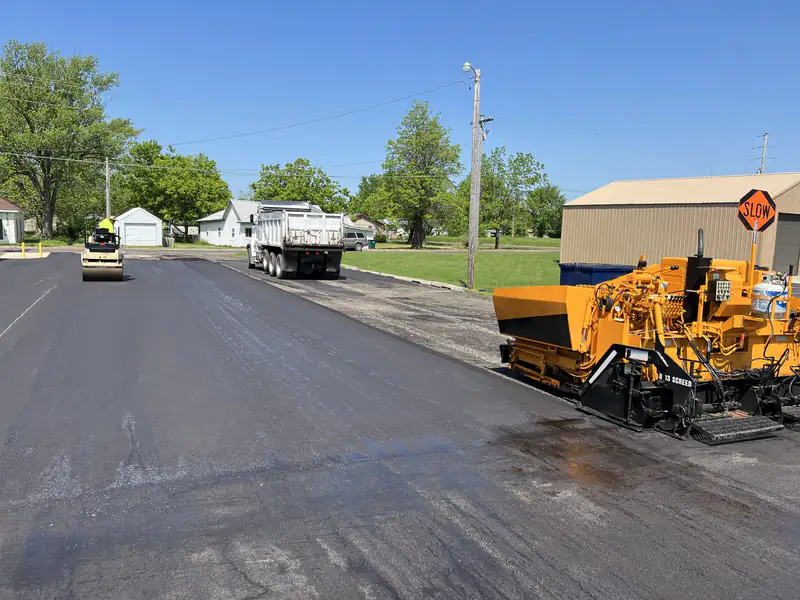
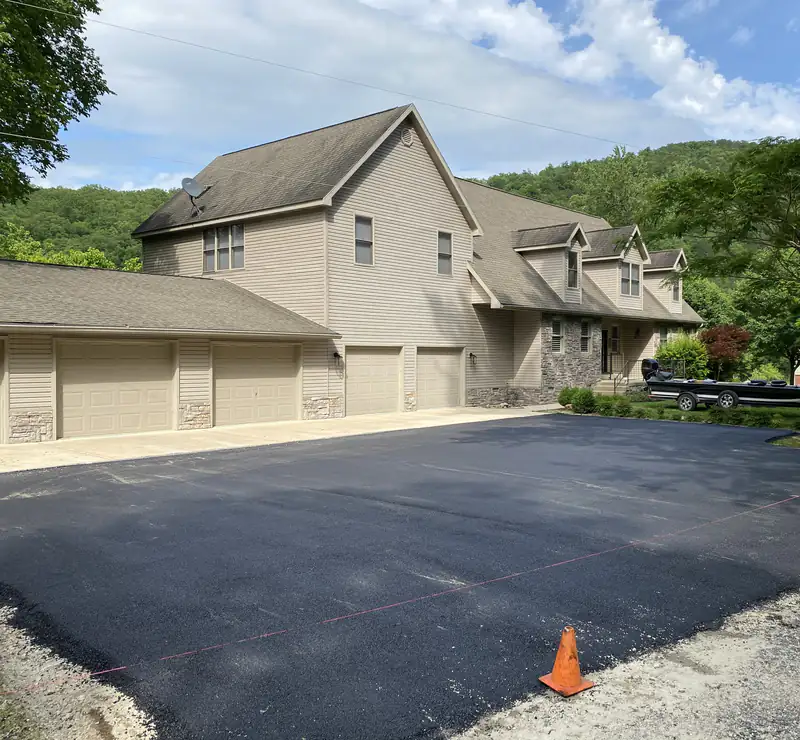
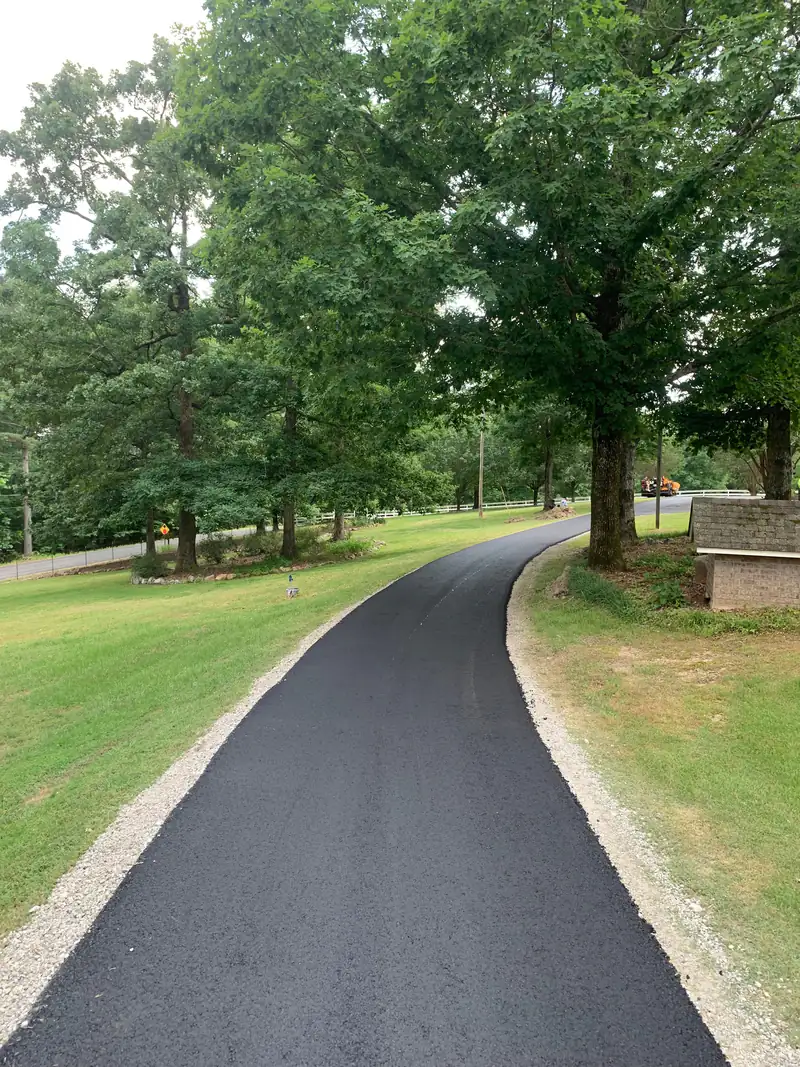
Most driveway failures start below the surface. Soft clay, thin base rock and water with nowhere to go can crack good-looking asphalt within a few winters. So we start with what is under the surface: the soil, the stone and the drainage. Then hot mix goes down over a firm base and gets rolled tight. You get a free on-site estimate, a written quote and 25% off. Call (866) 490-7680.
Asphalt driveway services for St. Louis homes
Most driveway projects fall into a handful of types. Knowing which one you have is the first step to a fair quote, because the price and the result both depend on what happens under the asphalt. Not sure which fits yours? That is what the free estimate is for. We look at it with you, explain what we see, and put the options and your 25% off in writing.
Here is the residential driveway work we do across St. Louis and the Metro East:
- Gravel-to-asphalt conversions: regrade the drive, add and compact base stone, then pave.
- Tear-out and replace: remove failed asphalt, rebuild the base, pave new.
- Overlays: a fresh layer of hot mix over a driveway whose base is still sound.
- Widening: added width along one or both sides, tied cleanly into the old edge.
- Turnarounds and parking pads: room to pull out front-first and a spot for the extra car, boat or trailer.
- Long rural lanes: country drives built with crown, ditches and culverts in mind.
- Hillside drives: steep grades shaped to shed water and hold up to braking tires.
Built for St. Louis clay, freeze-thaw winters and hot summers
Clay soil is common around St. Louis. Clay drains slowly, and many clays swell when they get wet, shrink as they dry out and lose strength when they stay soaked. Lay thin asphalt over wet clay and a heavy truck can leave a dip. That is why the base under your driveway matters as much as the blacktop you see.
Winter is the next test. Water gets into cracks, freezes, expands and pries them wider. Around St. Louis the temperature often swings above and below freezing many times in one winter, so a small crack in November can grow into a pothole by March. A dense, well-compacted surface with good slope helps keep water out to begin with.
Summer brings the opposite problem. Hot, humid days keep fresh asphalt soft for weeks. Tires turned while a car sits still can scuff it, and a kickstand or trailer jack can sink right in. Most of that can be avoided if you know about it going in.
A driveway that holds up here is built in this order:
- Soft or muddy spots dug out and replaced with compacted stone.
- A compacted crushed-stone base, typically 6 to 8 inches thick, and more over soft clay or where trucks will drive.
- Slope for drainage, typically about 2 percent (roughly 1/4 inch per foot), carrying water away from the house and garage.
- Hot-mix asphalt, typically 2 to 3 inches compacted for a home driveway, rolled while it is still hot.
- Firm, tapered edges backed with soil or stone so they resist crumbling.
Gravel to asphalt driveway conversions
A gravel drive already has stone in it, and sometimes that stone can be put back to work. After years of traffic, though, the rock is often pressed down into the clay or mixed with mud. Rock like that cannot support pavement well. So the job starts with grading the drive, digging out soft spots and adding fresh crushed stone where the old layer is thin.
Next, the base is shaped to its final slope and compacted in layers. Compaction is one of the biggest factors in how well the driveway holds up. Loose stone under asphalt settles, and the surface follows it down. Once the base is firm and even, hot mix is placed, raked at the edges and seams, and rolled until it is tight.
The payoff shows up the first spring: no more ruts, no more puddles to fill, no more gravel tracked into the garage or thrown into the yard by the mower, and a smooth surface you can shovel or plow in winter.
Overlay or tear-out and replace?
An overlay is a new layer of asphalt, typically 1.5 to 2 inches, placed over the old surface after it is cleaned, patched and sprayed with a tack coat so the two layers bond. It usually costs less than starting over, and it works well when the base under the old asphalt is still solid.
The catch is that an overlay tends to copy whatever is below it. Cracks in the old surface often show back up through the new layer within a few years, and cracks from a failed base are the most likely to return. An overlay also raises the surface, which can leave a lip at the garage floor, the sidewalk or the street unless those edges are milled or cut down first.
When the base has failed, a full tear-out is usually the better buy, and the old asphalt does not have to go to waste. Asphalt is one of the most recycled materials in the country, and torn-out pavement is commonly ground up and reused in new hot mix or as base material.
Signs that point to a tear-out instead of an overlay:
- Alligator cracking (small connected cracks that look like scales) over large areas.
- Sinking, rutting or soft spots you can feel when you drive over them.
- Water that pools in the same places after every rain.
- Asphalt breaking apart into loose chunks and potholes.
Long lanes, hillside drives, widening and parking pads
Out in the surrounding counties, a driveway can run hundreds of feet to the road. Long lanes carry more than cars: propane trucks, delivery trucks, a tractor now and then. They often need a thicker base and asphalt section than a short suburban drive, a crown or cross slope so rain runs off to the side, and ditches and culverts that keep water from crossing or undercutting the pavement.
Plenty of homes around St. Louis sit on a slope. A hillside drive needs asphalt that is placed and rolled so it stays dense on the grade. Water running down the drive has to be turned before it reaches the garage, often with a trench drain or a swale along the side. The bottom, where the drive meets the street, has to be shaped so cars do not scrape.
Widening a single-lane drive so two cars fit side by side is a common driveway upgrade. A typical single lane is about 10 to 12 feet wide, and a two-car drive is typically 18 to 24 feet. The new strip gets its own dug-out, compacted base, and the joint with the old asphalt is cut clean and tack-coated so it is less likely to become the first crack. A turnaround lets you pull out front-first instead of backing onto a busy road, and a parking pad gives the boat, the trailer or the extra car a spot off the grass.
Caring for a new asphalt driveway
Fresh asphalt can take foot traffic quickly, but it keeps curing for months. You can usually drive on a new driveway after 2 to 3 days, longer in hot weather. For the first few weeks, avoid turning the wheel while the car is standing still, park in slightly different spots, and keep heavy trucks, campers and dumpsters off it. Set a piece of plywood under kickstands and trailer jacks.
Upkeep is simple. Fill cracks as they appear, ideally before winter, so water cannot get under the surface. Keep the edges backed with soil or sod so they stay supported. Sealcoat should wait until the asphalt has cured, typically at least 6 to 12 months, and paving industry guidance says a well-built driveway often does not need its first coat for a few years. After that, a coat every few years helps slow sun and weather wear. With a solid base and basic care, an asphalt driveway typically lasts 15 to 20 years.