Three fixes, three different depths
Every parking lot repair comes down to one question: how deep does the damage go? Each fix reaches deeper than the last, and cost and downtime usually climb with it.
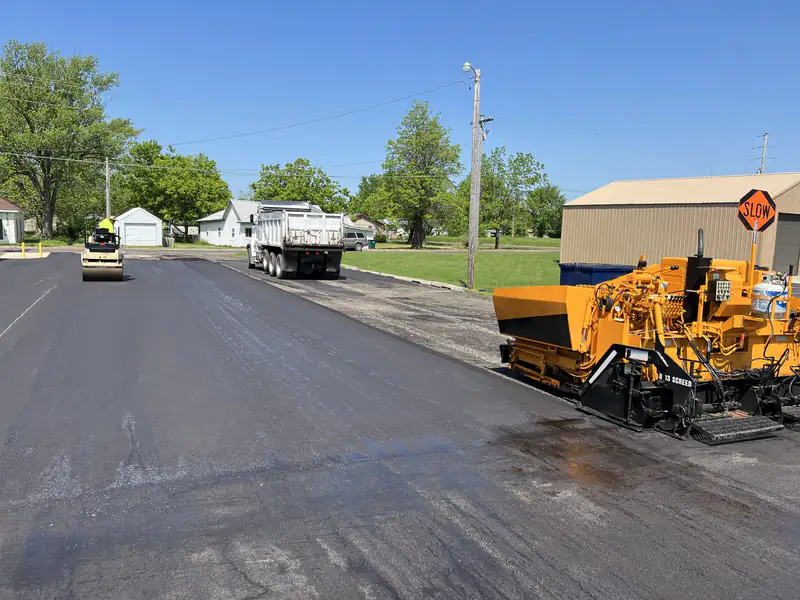
- Overlay (resurfacing): cracks are sealed, bad spots patched and a tack coat sprayed so the layers bond. Then new hot mix goes right on top. A thin overlay is usually under 2 inches; a structural overlay is 2 inches or more.
- Mill-and-fill: a milling machine grinds off the worn top layer, and new hot mix goes back in at the same height, typically in lifts of 1.5 to 3 inches, the range the Missouri Asphalt Pavement Association (MAPA) recommends for parking lots. Curbs, drains and doorways stay at their original height, and the grindings can be recycled into new asphalt.
- Full-depth replacement: the asphalt comes out and the base under it is repaired or rebuilt. A related method, full-depth reclamation, grinds the old asphalt and part of the base together in place, usually mixes in a stabilizer such as cement, lime or asphalt emulsion, and compacts it into a new base.
Read the cracks first
Cracks tell you where the problem lives. Walk the lot on a dry day and look at the pattern, not just the count.
- Straight, widely spaced cracks: usually temperature swings and aging asphalt. Seal them once they open past about 1/4 inch so water stays out and they don't branch into more cracks.
- Block cracking, rough rectangles with cracks meeting at near right angles: the asphalt is hardening and shrinking with age. Sealcoat helps early. Once blocks get small and cracks open up, it is overlay or rebuild time.
- Long cracks in the drive lanes where tires run: early fatigue from traffic loads. Several in the same lane mean the pavement needs strengthening, not just sealing.
- Alligator cracking, a chicken-wire pattern of pieces roughly 1 to 6 inches across: the pavement is failing under load, very often because the base or soil below is weak. Sealing or an overlay alone will not fix it; the area has to be dug out and rebuilt.
Potholes, soft spots and base failure
One small pothole where the top layer broke loose can be cut out and patched. Several potholes, or potholes inside alligator-cracked areas, point to trouble in the base or soil, often with poor drainage involved.
Other warning signs: pieces that move when a car rolls over them, water or fine soil pumping up through cracks, ruts and dips in the drive lanes, and patches that crack or sink again.
The PASER road rating system from the University of Wisconsin-Madison gives a handy rule of thumb. When alligator cracking covers less than about 25 percent of the surface, it calls for patching and repair before a structural overlay, with milling to help the overlay last. Past 25 percent, or with ruts 2 inches deep or more, it calls for reconstruction with extensive base repair.
Watch where the water goes
MAPA names drainage problems as a frequent major cause of parking lot failures. Water that gets under the asphalt softens the base and soil, and the pavement above can crack and sink.
St. Louis weather adds to it. NOAA's 1991 to 2020 normals for Lambert airport show about 41.7 inches of precipitation a year and about 85 days with a low of 32°F or colder. On roughly 66 of those days the high climbs back above freezing, so water in cracks can freeze and thaw over and over.
Walk the lot right after a hard rain and look for:
- Puddles that sit for hours (crews call them birdbaths)
- Storm inlets that are clogged, sunken or higher than the pavement around them
- Downspouts dumping roof water across the lot
- Broken pavement next to sprinkler-watered islands or heaved by tree roots
Matching the fix to your lot
Overlays have limits. Cracks in the old pavement tend to show back up through the new layer, which engineers call reflective cracking. Every inch added raises the surface at curbs, door thresholds and drain grates, so castings must be raised to match. And an overlay that simply follows the old surface won't fix a lot built too flat: the Asphalt Institute recommends at least 1.5 percent slope on parking lots, and MAPA recommends at least 2 percent.
Put the cracks, potholes and puddles together and the choice usually gets clear:
- Overlay fits a structurally sound lot with room to add height at curbs, doors and drains. Federal Highway Administration guidance for thin overlays calls for no fatigue cracking or potholes and ruts under 3/8 inch.
- Mill-and-fill fits a worn-out surface over a mostly sound base, or a lot where earlier overlays have eaten up the curb height. Cut out and rebuild alligator-cracked areas first.
- Full-depth replacement fits widespread alligator cracking, deep ruts, potholes through the base, or soft, wet ground. Fix the drainage in the same project, or the new asphalt is likely to fail the same way. For a 15-year design on lots that see mostly cars, MAPA's Missouri tables recommend about 2.5 to 3 inches of asphalt over 6 inches of aggregate base, depending on soil strength, and at least 6 inches of asphalt over 8 inches of base where garbage trucks stop at dumpsters.
Keeping the business open while you pave
Many lots can be paved in phases so customers can still get in. A good phasing plan covers:
- Zones: pave the sections farthest from the door first, so the closest spaces stay open longest.
- Access: keep at least one driveway open and coned off from the work, with signs at the street.
- Timing: work around your slow hours, such as weekends for offices, weekdays for churches and early mornings for stores. Mill and pave each zone close together so customers are not driving on a rough milled surface for days.
- Accessible parking: set up temporary accessible spaces near an accessible entrance for each phase. ADA rules allow isolated or temporary interruptions in access for repairs, but keeping accessible parking open is the better practice.
- Weather: MoDOT's specifications don't allow hot mix on a wet or frozen surface, or when the air or surface is below 40°F, so book the warm months and leave slack for rain days.
- Cure time: traffic has to stay off each zone until the new asphalt cools and firms up. Plan on each zone typically being closed about a day, longer where the base is rebuilt. St. Louis averages about 47 days a year at 90°F or hotter, and fresh asphalt scuffs easily in heat, so keep heavy trucks and tight turns off it at first.
ADA stall and striping basics
When a business or a state or local government restripes a lot, it must provide accessible parking that meets the 2010 ADA Standards. The U.S. Access Board also treats resurfacing or resealing a lot as an alteration, so an overlay, mill-and-fill or sealcoat job brings in the same rules. The basics from ADA.gov and the Access Board:
- Count: 1 accessible space for 1 to 25 total spaces, 2 for 26 to 50, 3 for 51 to 75 and 4 for 76 to 100, rising from there. Count each lot separately. Hospital outpatient, rehab and residential lots have different rules.
- Van spaces: at least 1 of every 6 accessible spaces, and never fewer than 1.
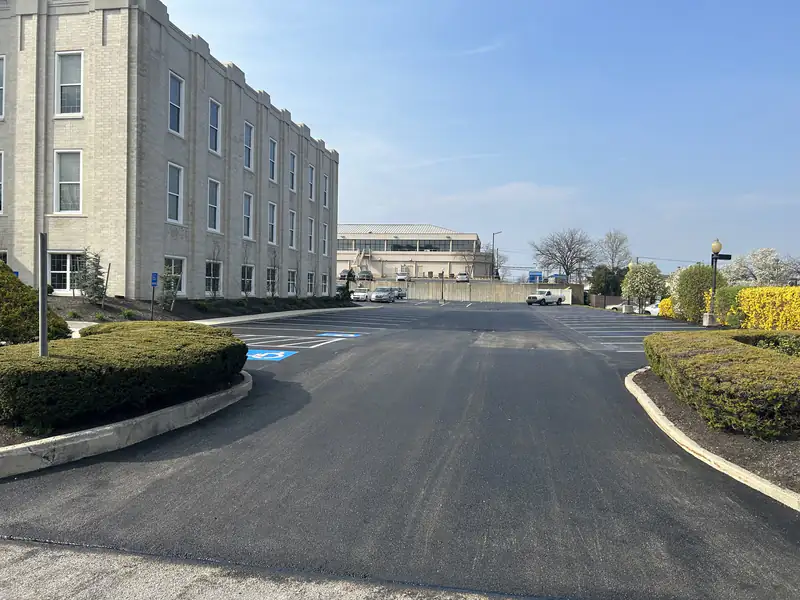
- Size: car spaces at least 96 inches wide with a 60-inch access aisle. Van spaces either 132 inches wide with a 60-inch aisle or 96 inches wide with a 96-inch aisle.
- Slope: accessible spaces and aisles can't slope more than 1:48 (about 2 percent) in any direction. The limit covers those stalls, aisles and routes, not the whole lot, but it is tight in a lot built to drain, so check stall slopes before and after paving.
- Signs and marking: mark aisles to discourage parking in them, mount signs with the bottom edge at least 60 inches above the ground and label van spaces "van accessible." Pavement symbols do not replace signs.
- Location: on the shortest accessible route to an accessible entrance. Curb ramps can't stick out into access aisles.
A maintenance plan that protects the new surface
Small, regular work helps keep a lot in overlay or mill-and-fill territory instead of full replacement. MAPA's 15-year designs expect only minor, periodic maintenance before major work such as an overlay is needed.
Each spring and fall, walk the lot, clear the drains and note new cracks, puddles and soft spots. Seal new cracks each year before they widen and ravel. Clean, dry cracks and a routed reservoir help the sealant hold.
Sealcoat once the surface turns dry and gray, shows small surface cracks or starts losing fine stone. The Asphalt Institute says a well-built lot usually won't need its first seal for about 2 to 5 years, depending on the climate and the quality of the original work. Restripe right after, since sealcoat covers the paint. Replace small failed areas full depth before they spread, and fix drainage the first time you see a problem.
Not sure which fix your lot needs? Chesterfield Asphalt Paving offers free estimates, plus 25% off, across greater St. Louis on both sides of the river. Call (866) 490-7680 or request your free estimate online.
Questions
Can I overlay a parking lot that has alligator cracking?
Not over the failed areas. Alligator cracking usually means the base underneath is weak, and federal guidance for thin overlays calls for no fatigue cracking or potholes. Rebuild those areas full depth first; then an overlay or mill-and-fill can work on the rest.
Will my parking lot have to close completely?
Often not. Many lots can be paved in zones so one entrance and part of the parking stay open. Plan on each zone typically being closed about a day, longer where the base is rebuilt.
If I only restripe my lot, do I have to update the accessible parking?
Usually, yes. ADA.gov says businesses and state and local governments that restripe must provide accessible parking that meets the 2010 ADA Standards, and the U.S. Access Board treats resurfacing or resealing the same way. Touching up the paint on a few existing spaces in place counts as normal maintenance. Your city or county may add its own rules, so check locally too.
Sources
- University of Wisconsin-Madison Transportation Information Center: PASER Manual, Asphalt Roads
- Federal Highway Administration: Distress Identification Manual for the LTPP Program (FHWA-HRT-13-092)
- Federal Highway Administration: Thin Hot Mix Asphalt Overlay Checklist (FHWA-HIF-19-030)
- Federal Highway Administration: Full Depth Reclamation Checklist (FHWA-HIF-19-038)
- Federal Highway Administration: Crack Treatment Checklist (FHWA-HIF-19-028)
- Missouri Asphalt Pavement Association: Asphalt Parking Lot Design
- Asphalt Institute: Engineering FAQs
- Missouri Department of Transportation: Missouri Standard Specifications for Highway Construction, 2025 (Sections 401 and 403)
- NOAA National Centers for Environmental Information: 1991-2020 Annual Climate Normals, St. Louis Lambert International Airport (USW00013994)
- ADA.gov: ADA Compliance Brief, Restriping Parking Spaces
- U.S. Access Board: Guide to the ADA Accessibility Standards, Chapter 5: Parking Spaces
- ADA.gov: Title III Regulations, 28 CFR 36.211 (maintenance of accessible features)